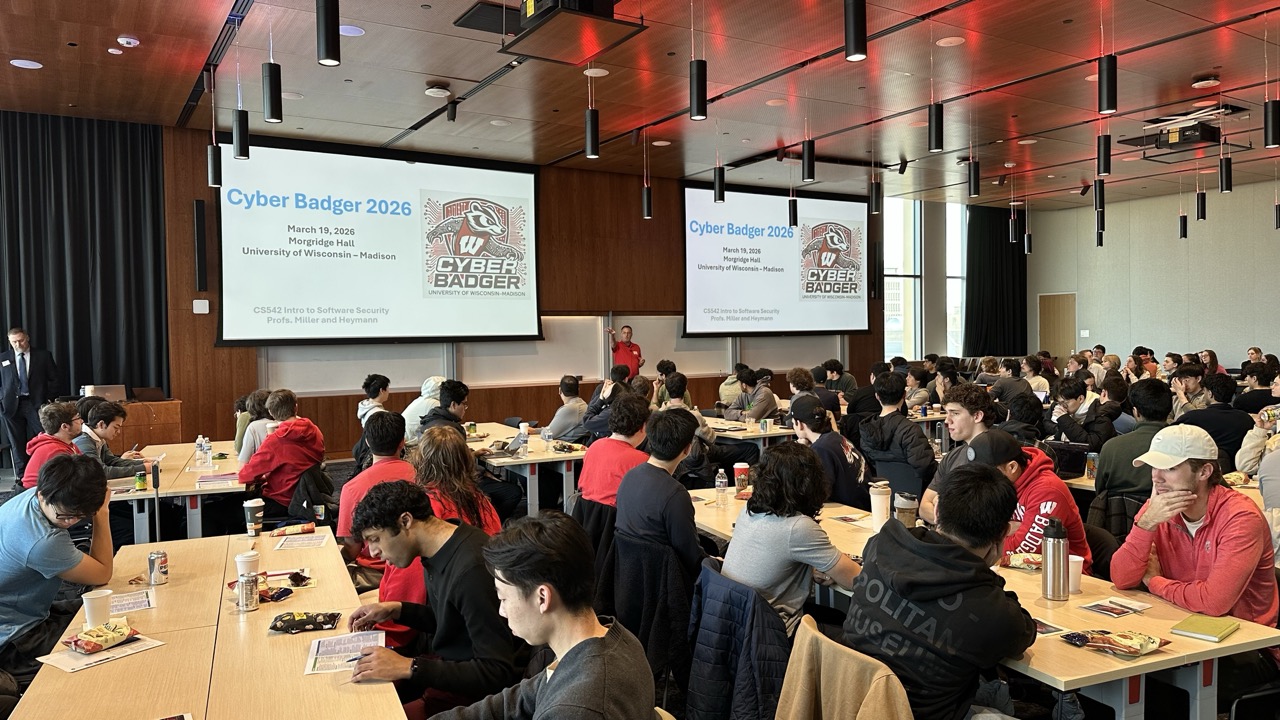
For the fifth year in a row, students at the University of Wisconsin–Madison found themselves in the middle of a major cyberattack – but this time, in a brand new setting. On March 19, 2026, 120 students gathered in Morgridge Hall‘s Wisconsin Alumni Research Foundation (WARF) Centennial Seminar Room for Cyber Badger 2026, the university’s annual student cyber tabletop exercise.
And, for the first time, the exercise featured a scenario ripped from today’s headlines: an AI-enabled ransomware attack targeting critical infrastructure.
The student participants are enrolled in Prof. Bart Miller‘s and Senior Research Scientist Elisa Heymann‘s Introduction to Software Security (CS 542), offered through the School of Computer, Data & Information Sciences (CDIS). Students took on simulated roles across a range of organizations that would respond to a real-world cyber incident, working through the complexities of coordinating a response to a sophisticated attack.
The exercise scenario was created by the U.S. Department of Homeland Security (DHS) Cybersecurity and Infrastructure Security Agency (CISA), and facilitated by partners from Wisconsin Emergency Management‘s Cyber Response Team (CRT), the Federal Bureau of Investigation (FBI)‘s Cyber Division, the Wisconsin Army National Guard‘s 176th Cyber Protection Team (CPT), and Alliant Energy, a major utility serving customers in Wisconsin and Iowa. Michael David facilitated the exercise with several volunteers from the CRT.
“Our goal with Cyber Badger is to immerse students in a real-world cyber scenario and show them that responding to a cyberattack is about more than just the technology,” said Miller, Vilas Distinguished Achievement Professor and Amar & Belinder Sohi Professor in Computer Sciences. “Adding an AI dimension to this year’s ransomware scenario reflects the rapidly evolving threat landscape these students will face in their careers.”
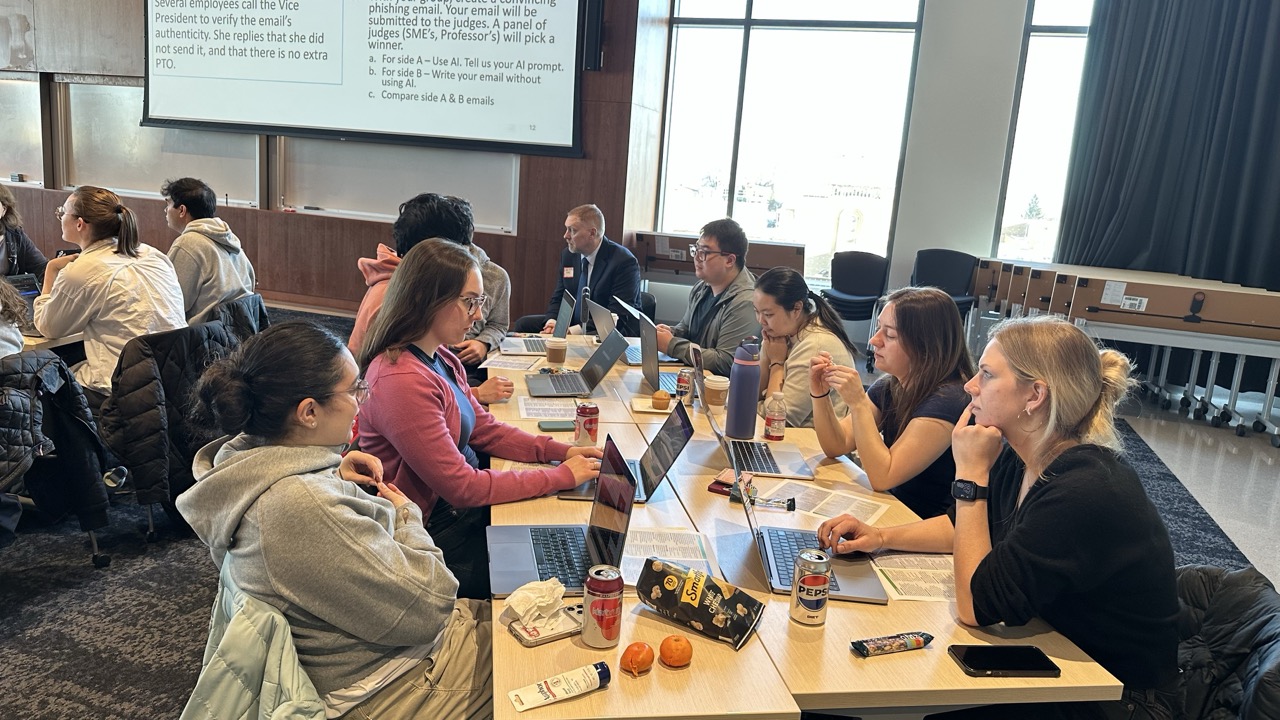
This year’s move to Morgridge Hall – the new home of CDIS, which opened in fall 2025 – marked a milestone for the exercise. What began as 75 students in Union South’s Varsity Hall in 2022 has grown into one of the signature events of UW–Madison’s cybersecurity curriculum, drawing over 120 students and more than 20 government and industry partners in recent years. Previous exercises simulated ransomware attacks on a community water utility (2022), an electric power utility with NextEra Energy (2023), and an energy grid cyberattack in partnership with WEC Energy Group (2024).
And Cyber Badger’s home is about to gain even more prominence. On July 1, 2026, CDIS will be reorganized into the new College of Computing and Artificial Intelligence (CAI) — the first new academic division at UW–Madison since 1983. Approved by the UW Board of Regents in December 2025, CAI will build upon decades of investment in computing, data science, and information sciences to serve as a scholarly hub for the entire campus – and its focus on AI is especially timely given this year’s AI-enabled exercise scenario.
Alliant Energy, which serves approximately one million electric and nearly half a million natural gas customers, served as this year’s utility partner. Nick Terrible, a cybersecurity analyst from the company, provided a briefing on cyber threats to the energy sector, and worked alongside students sharing the real-world challenges that energy providers face in defending their systems against increasingly sophisticated cyber threats.
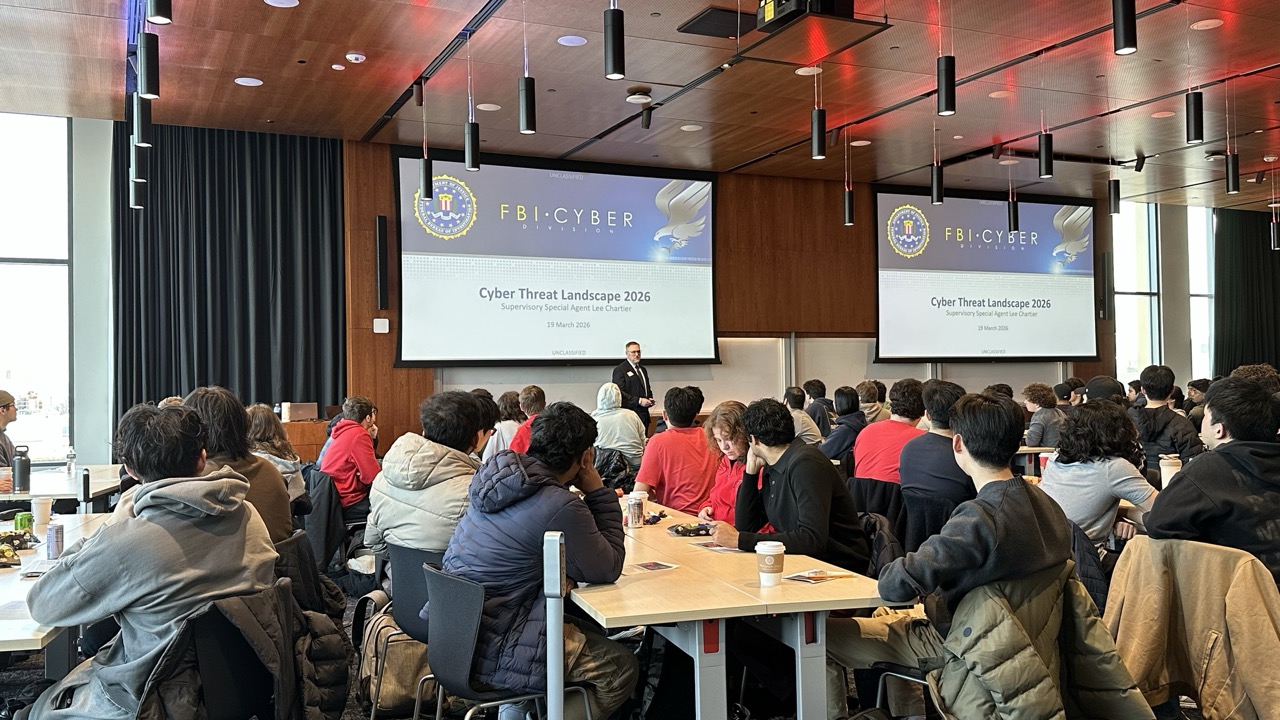
FBI Supervisory Special Agent Lee Chartier briefed students on the current cyber threat environment facing U.S. critical infrastructure, including how the FBI investigates cyber crimes and coordinates with government, industry, and international partners. The Wisconsin National Guard’s 176th Cyber Protection Team provided expertise in cyber incident response and Operational Technology (OT) and Industrial Control Systems (ICS), the technology that drives much of the nation’s critical infrastructure, from power plants and water treatment facilities to healthcare and manufacturing systems.
Dr. Dave Schroeder, Director of National Security Initiatives at UW–Madison and Commander of the Wisconsin Army National Guard‘s 176th Cyber Protection Team, emphasized the importance of the collaboration. “For these students, Cyber Badger gives a new perspective on the cyber threats our nation faces. The AI-enabled dimension of this year’s exercise reflects the reality that adversaries are using AI to increase the speed, scale, and sophistication of their attacks – and we need to prepare the next generation of defenders accordingly.”
Cyber Badger is designed to provide students with hands-on experience responding to complex cyber incidents, pushing them to think critically and work collaboratively under pressure. Students simulated the various actions and elements that would be involved in responding to a real-world cyberattack on critical infrastructure.
As part of a continuing effort to align cybersecurity education with government and industry needs, Cyber Badger will return next year with new partners and new challenges. “The evolution of Cyber Badger over the past five years – from our first exercise with CISA in 2022 to this year’s AI-enabled ransomware scenario in Morgridge Hall – shows just how far we’ve come,” Miller said. “The partnerships we’ve built are a staple of our software security curriculum, and we look forward to continuing to grow the event in the new College of Computing and Artificial Intelligence.”
Cyber Badger helps UW–Madison meet goals aligned with its designation by the National Security Agency (NSA) as a National Center of Academic Excellence in Cyber Research (CAE-R) and its Educational Partnership Agreement with U.S. Cyber Command, which are intended to help the nation respond to and prevent cyber events by building a workforce with these skills. For more information about Cyber Badger and other cyber initiatives at UW–Madison, visit https://go.wisc.edu/cyber.