Meet six new grads set to shape the future of computing, data and information
By Thomas Jilk and Rachel Robey
We are excited to congratulate the hundreds of new graduates of the School of Computer, Data & Information Sciences (CDIS) this December. Our newest alumni are already making an impact in their respective fields, connecting technology and humanity as the next generation of computing, data, library and information leaders.
Meet six of our outstanding new graduates:
Exploring how language and data intersect
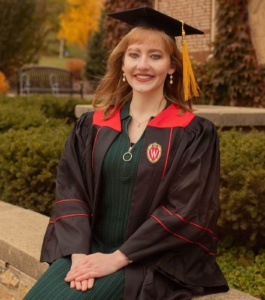 As a double major in Information Science and Linguistics, Lillian Walbrun has pursued her passion for foreign languages by creatively leveraging data. This semester, for example, she developed an innovative method of analyzing historical census data for a research project—entitled “How can we get more language data from the 1910 US Census?”—led by Professor Joe Salmons of the Language Sciences department and presented at a conference in Norway.
Walbrun has also served as a student leader on campus, co-founding the Balkan Badger Association, a student organization dedicated to promoting Balkan cultures and languages, and serving as an officer in the Linguistics Student Organization. Peers described her as one of the “brightest stars” at UW–Madison.
Within the Information Science major, Walbrun said, “I enjoyed learning about security, text-mining, and ethics in technology. I also have appreciated watching the program grow as new course offerings were introduced throughout my time here.” After graduation, she hopes to pursue graduate studies and work toward a career combining her technical and linguistic talents.
Seeing the world of sports through the lens of statistics
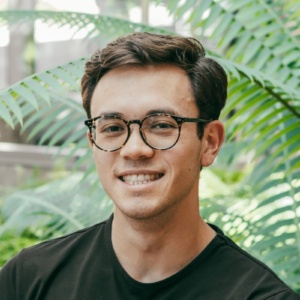 Ryan Yee, who is completing a PhD in Statistics this semester, has published research on both statistical methods and applications, especially in sports. Last year, with Assistant Professor Sameer Deshpande, Yee published an article on using advanced Bayesian statistics to better evaluate plate discipline in baseball—a new way of calculating when batters should swing.
Yee has also been actively involved in the Statistics Graduate Student Association, with peers calling him “a leader among his fellow graduate students.” He served as a project assistant for the Statistical Consulting Group, helping bring statistical expertise to projects led by researchers in other departments. Honored for his outstanding performance as a teaching assistant, Yee has instructed students on a range of topics from machine learning to data science modeling and statistics for engineers.
“A major highlight of my program was taking the graduate seminar on nonparametric Bayesian methods, taught by my advisor, Sameer Deshpande,” Yee said. “Almost my entire [PhD] cohort took the class, which created a very collaborative atmosphere. Sameer did an excellent job matching topics to our individual expertise, and it was incredibly rewarding to tackle complex material while helping my friends prepare and refine their work.”
Revealing new research pathways via digital humanities
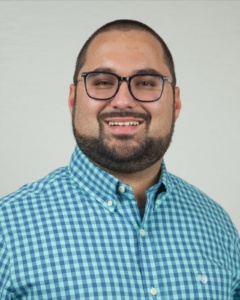 As part of a team of Library & Information Studies master’s students, Alex Belovich traveled to Denver this fall to present research at the Digital Library Federation (DLF) Forum. The team examined how digital humanities tools and methods like topic modeling and story graphs could unlock new interdisciplinary research avenues—using the Information School’s own uniquely extensive collection of historical library materials.
Entitled “What’s In the Box? LIS Students Use a Digital Humanities Toolkit to Explore Interdisciplinary Research Potential within Undiscovered Collections,” the project was inspired by the iSchool’s recent move from its longtime laboratory library space in Helen C. White Hall to the Rebecca Blank Student Commons in Morgridge Hall. Belovich’s work exemplifies the Wisconsin Idea—helping library and information scientists, and researchers everywhere, harness digital tools to make new discoveries within often vast collections.
Belovich said that through the MA program, he “connected with a wide array of library world professionals and gained realistic and practical understanding of the library field and the importance of digital literacy for library professionals and users.” He expressed particular gratitude to advisor David McHugh and Teaching Faculty Megan Adams for helping grow his confidence harnessing digital tools and programming. After graduation, Belovich plans to remain in higher education environments, with hopes of working on digital humanities and open access initiatives in academic libraries.
Bringing precision agriculture to cranberry farmers
 Dharani Suresh Babu, Graduate School flag bearer and PhD graduate in Horticulture and Computer Sciences, arrived at UW–Madison ready to use computer science to solve broad-sweeping issues facing modern agriculture. While here, Babu used cutting-edge AI, machine learning models, and the partnership of local Wisconsin cranberry farmers to advance precision agriculture from theory into practical, scalable implementation.
These hand-built models, capable of predicting cranberry growth, stress, and harvest, became a field-ready web application that’s now actively used by cranberry growers across the state. The result was an immediate and obvious win: a reduction in crop losses, improvements in harvest timing, enhanced fruit quality, and the promotion of sustainable production practices.
Her efforts haven’t stopped there — Babu has met with Wisconsin state legislators to share how data science and engineering research drive sustainable agricultural innovation. “Our skills are not limited to software or code — they can help feed the world, support sustainable systems, shape public policy, and inspire the next generation,” she said. Babu also facilitated legislative visits to cranberry marshes to support evidence-based policymaking and support the connection between science and policy development.
Supporting Wisconsin’s largest hackathon
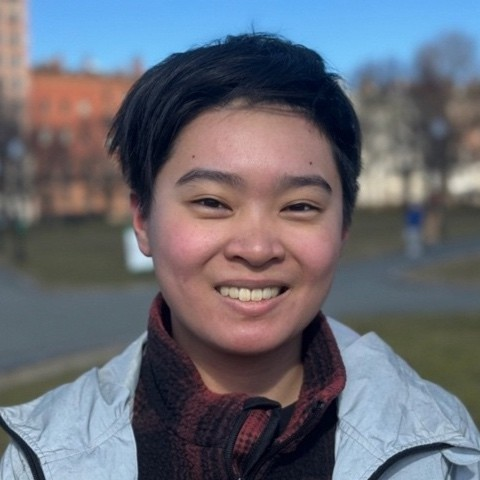 MadHacks, one of the largest hackathons in the midwest, doesn’t just happen on its own — it takes a team of over a dozen UW–Madison student volunteers and alumni to bring it to life each year. One such organizer is Emily Yao, a BS student in Computer Sciences and Mathematics who has supported event production and logistics for the past three years. “This year, we hosted our largest event ever for over 400 hackers in the midwest area,” she said.
Yao, the most recent recipient of the David Dewitt Undergraduate Scholarship, also spent her time as an undergraduate with the Undergraduate Projects Lab (UPL), a beloved community hub for students and recent alumni alike. “When I started, the organization was still recovering from a dwindling number of participants post-COVID, but in the three years since then, we’ve grown to have a steady stream of new faces every year,” said Yao.
Amidst all this, Yao also managed to pursue extracurricular internships and research opportunities with MadPL, UW CONNECT Lab, Informatics Skunkworks, and the Center for High Throughput Computing. With friends, she also competed at coding competitions, taking 5th at MIT Battlecode this year.
‘Scholarship must be honest to be useful’
 For Vardaan Kapoor, a triple-major in Computer Sciences, Data Science, and Mathematics, his undergraduate experience might have been rigorous — but it was still “a fairytale.”
“I arrived at UW–Madison from Agra, India, where AP classes and college credits weren’t even on the map,” he said. After late nights teaching himself Java, solving problems with the help of his sister, and “imagining a future where code and math could open doors I had never seen,” Kapoor went on to pursue three degrees and 133 credits in just seven semesters. “Time management became less of a skill and more of a way of life,” he explained.
Not content with simply graduating early, Kapoor also completed eight fellowships with Meta and Google, served as president of the UX Club, and pursued research projects: “I learned that scholarship must be honest to be useful,” he said. “I care as much about the engineering that makes a paper reproducible as I do about the mathematics behind it. Research alone feels incomplete unless shared.”
This led him to AI@UW, where he served as vice president and then president, at which point the club received the 2025 Dean’s Award of Excellence. “Under my leadership the club expanded to two thousand members, launched flagship hackathons, ran over a hundred mentored projects, and hosted weekly seminars that became a campus staple,” said Kapoor. Next up: a PhD in Statistics and Computational Mathematics.
Congratulations to all of our winter 2025 graduates!